If you enjoy off-road driving, you’ve probably heard the term “differential lock” before . This important component is one of the most crucial parts of an all-wheel-drive vehicle, as it determines whether your vehicle gets stuck in the mud or successfully tackles difficult terrain.
This article explains in simple, easy-to-understand technical terms what a differential lock is, how it works, the different types available, and why it is so important for off-road vehicles. We also cover installation methods, advantages and disadvantages, the most common brands , and their prices in Iran .
What is a differential and what function does it have in a car?
Before we can understand how differential locks work, we need to know what a differential is.
The differential is an important transmission component located between the two wheels. Its function is to ensure that the inner and outer wheels rotate at different speeds when the vehicle turns.
short:
-
The inner wheel covers a shorter distance in the curve → its rotational speed must be lower.
-
The outer wheel has a longer distance to travel, therefore it must rotate faster.
Without a differential, the wheels would have to rotate at the same speed, which would cause the car to become unbalanced when turning.
Common differential problems when off-road driving
Conventional differentials can fail on wet, muddy, or poorly maintained roads.
Since a differential gear transfers power to the wheel with the least resistance , if one wheel is on a smooth surface (such as dirt or air), all the power will be transferred to that stationary wheel, while the other wheel remains stationary.
The result?
The car came to a standstill and couldn’t even move on one wheel on the dry road!
This is where the differential lock comes into play.
What is a differential lock?
A differential lock is a system that prevents the wheels on the same axle from rotating at different speeds. This means that when the differential lock is engaged, regardless of which wheel is in contact with the ground, both wheels on the front or rear axle will rotate at the same speed .
In short: If one wheel gets stuck in the mud, the other wheel can still absorb power and the vehicle can move.
Types of differential locks
Depending on the activation method and purpose, locking systems can be divided into different types:
1. Manual differential lock
With this type of system, the driver manually activates or deactivates the vehicle locking mechanism. This is usually done in the following way:
-
Electric buttons in the driver’s cab
-
Air system
-
mechanical crane
 Advantages : Full control by the driver. Disadvantages:
Requires experience and knowledge of the activation points.
2. Automatic differential lock
With this system, the wheel locks automatically as soon as slippage is detected. The lock is released as soon as the wheel returns to its normal position.
Advantages : Can operate automatically without driver intervention
. Disadvantages: Vibrations or noise may occur when driving in city traffic, especially on curves.
3. Limited-slip differential (LSD)
A limited-slip differential (also called a locking differential) is located between an open and a lockable differential. Normally, this type of differential allows the vehicle to travel at different speeds. However, if the speed difference becomes too great, it directs some of the power to the wheels with the greatest resistance.
Advantages : Suitable for mixed use (city + light off-road).Disadvantages : Not as effective as a true differential lock on uneven roads.
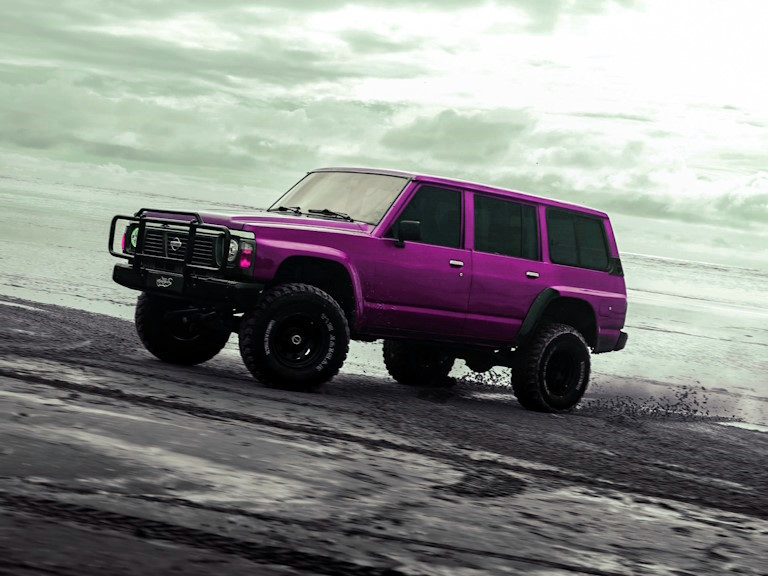
Installation location of the differential lock
In vehicles with all-wheel drive (4WD), differential locks can be installed on the front axle, the rear axle, or both axles.
-
The more common option is mounting it on the rear axle, as this offers the best traction.
-
The front axle design is suitable for very rough terrain, but should be used with caution (it can make steering in sharp turns more difficult).
-
Professional off-road vehicles typically have both axles locked (dual differential lock).
Advantages of using a differential lock
-
 Improved obstacle handling: Vehicles can more easily overcome potholes, sand and stones.
 -
 This reduces the risk of a breakdown: The car can continue moving even if one of the wheels loses contact with the ground.
 -
 Increased safety and control when driving off-road, especially on wet or rocky slopes.
 -
 It uses the entire engine power efficiently: This reduces power loss at the wheels when idling.
 -
 Modification options : Many SUVs such as the Nissan Patrol, Toyota Land Cruiser, Pajero and Hilux can be equipped with differential locks.
Disadvantages of differential locks
-
 Reduced cornering stability: When the locking function is activated, maneuvering the vehicle around corners becomes more difficult.
 -
 In automatic mode, noises or knocking sounds can be heard, especially at low speeds.
 -
 High installation costs : especially for models with pneumatic or electrical systems.
 -
 Driving experience required : Incorrect activation of the differential lock on dry roads can lead to excessive stress on the differential.
Structure and operating principle of a differential lock
In a conventional differential gear, side gears and planetary gears create the speed difference between the wheels.
Differential locks have a mechanism for engaging the gears when needed.
This engagement can occur in one of the following ways:
-
Electric: Uses a small electric motor and switches in the cabin.
-
Pneumatic (compressed air operated): Uses compressed air (e.g. ARB differential lock)
-
Mechanics: with lifting devices and steel cables (similar to manual models)
When the locking device is activated, the side gears are connected and both shafts rotate at the same speed.
Globally recognized brand for differential locks
There are many well-known brands of differential locks on the world market and even in Iran:
| brand | nation | Type of work | He describes |
|---|---|---|---|
| Arb | Australia | Frame | The most popular brand among off-road fans, distinguished by outstanding quality. |
| Eaton safes | USA | Electric/Automatic | Durable and easy to install |
| Detroit box office | USA | car | Suitable for heavy vehicles on uneven roads |
| Yukon Brown Bear Ticket Office | USA | mechanically | Suitable for racing |
| Harop electronic ticket vending machines | Australia | electric | It does not require a compressor, which simplifies installation. |
Iran sets price differences (1404)
Prices for safes vary depending on the brand, vehicle type , and system (electric, pneumatic, or mechanical). On the current Iranian market (1404):
-
Mechanical manual ticket vending machines: approximately 30 to 50 million Toman
-
Electronic ticket vending machines: 60 to 90 million Toman
-
Air differential lock (ARB): Approximately 100 to 150 million Domon (including compressor).
Installation costs typically range between 5 and 15 million Toman.
Important points to consider when installing a differential lock
-
The installation may only be carried out by persons who have knowledge of the maintenance and operation of electrical systems .
-
On older vehicles (such as a Patrol or Land Cruiser), the crankshaft and pinion may need to be checked and calibrated.
-
Use suitable differential gear oil (typically 75W-90 GL5).
-
With the differential lock engaged, you must never drive at high speed on dry or paved roads .
Limited-slip differential (LSD system).
| Special feature | safes | LSD |
|---|---|---|
| Type of work | Both wheels were completely blocked. | Partial power transmission between the wheels |
| Inquiry | Heavy SUV | Mixed use (urban + rural) |
| Driver control | Manual control mode | car |
| It’s worth it | higher | fewer |
| Efficiency on difficult roads | Very large | half |
Can every car model be equipped with a differential lock?
Differential locks are generally possible on vehicles with a rigid axle and independent suspension. This is usually not the case with conventional front-wheel drive vehicles or city cars .
However, the following models with additional configurations are commonly available on the market:
-
Nissan Patrol Y60 and Y61
-
Toyota Land Cruiser
-
Mitsubishi Montero
-
Jeep Sahara and Wrangler
-
Toyota Hilux
-
Nissan Pickup
Experience driving a car with a differential lock.
Activating the differential lock significantly facilitates off-road driving . It distributes engine power evenly to all wheels, thus preventing unnecessary wheel spin. On slippery slopes, the vehicle climbs inclines with more power and handles potholes on unpaved roads more effortlessly.
However , on paved roads, especially when turning, it is advisable to deactivate the differential locks to avoid excessive stress on the differential and tires.
Proper techniques for using differential locks when driving off-road
-
The locking device should only be activated if there is a risk of slippage or jamming .
-
On slopes, you should definitely unlock the car to make control easier.
-
The two wheels on the same axle must have the same tires (a size difference would put a strain on the differential).
-
For vehicles with two locks (front and rear), activate the rear lock first and only then the front lock when needed.
Are differential locks suitable for city traffic?
Differential locks are generally unnecessary in normal city traffic. Furthermore, activating them on dry roads can lead to increased tire wear, higher fuel consumption, and additional strain on the transmission.
However, if your vehicle is mainly used off-road or on country roads, a differential lock is an excellent solution.
Conclusion: Why should you install a differential lock?
Differential locks are indispensable for off-road drivers and professional racers. Despite their relatively high price, their superior performance under extreme conditions makes them a valuable option for many off-road enthusiasts and a top choice for vehicle upgrades.
A differential lock allows your vehicle to overcome obstacles that even a standard all-wheel-drive vehicle cannot.
If you enjoy off-roading, desert adventures, or hiking in the mountains, a differential lock is undoubtedly one of the best investments you can make in your vehicle.